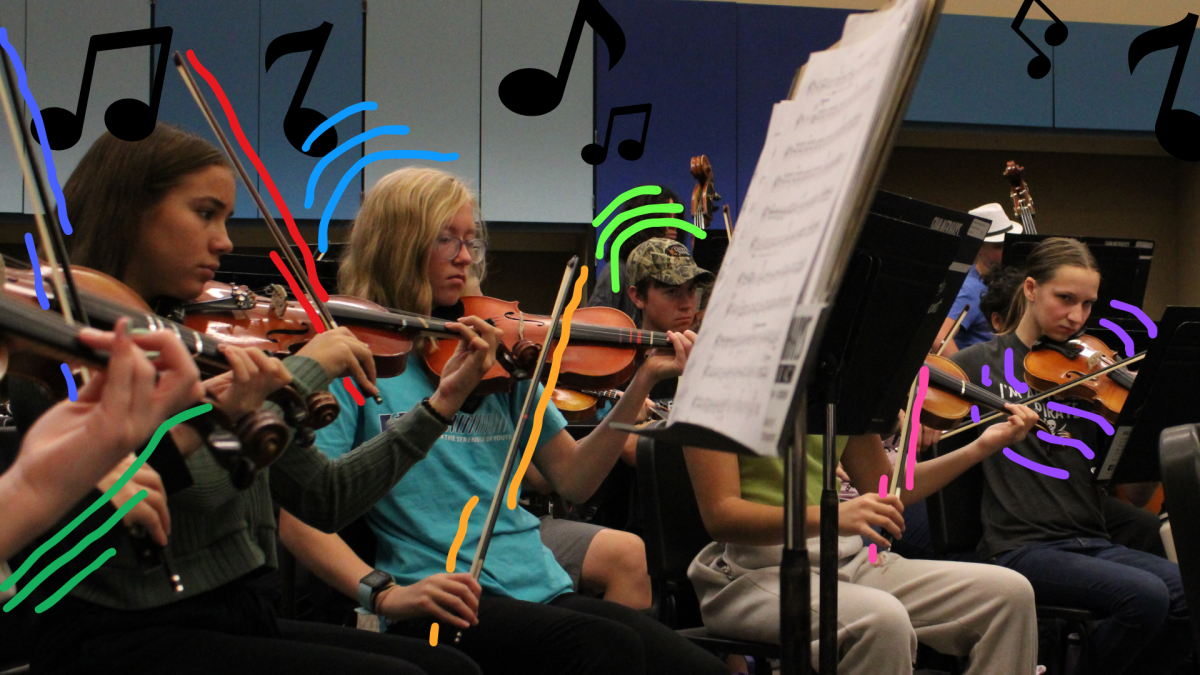
Does music actually help students in school focus during lessons or in general at school?
According to a person´ś research experiment, students focus more when they listen to music they like, And focus less when listening to music they dislike. Many try to engage by listening to music before starting an assignment or starting work. Also, numerous students listen to music when studying for the end-of-year exams to focus. Many have different opinions on this topic, whether students focus or don’t when music is playing. Some teachers play music when its independent work time for the students so it can be a sort of form for them to engage or work. “Music can motivate you, improve your mood, and help you relax. It can even help you focus so you can study or work. But different types of music can have different effects.” –Crystal Raypole in an article for Healthline Raypole says that music can affect Someone’s mood, which may be true for many and not for others. Raypole is I suppose, indicating that when someone’s mood changes in a good way they start engaging to what’s happening around them. Raypole says that music can be a form of motivation for a large number of people. According to David Cutler he read that listening to music can mess with the mind. For example, messing with someone’s mind by shortening the memory of that person.
Approximately 50-60% listen to music just for motivation, and many listen to music when cooking, working out, or cleaning because it’s a form of motivation for them. Likewise, students in school may listen to music just to be motivated, or they try to be engaged in their work. Freshman Grace Valle-Encarnacion said, “No, it does not affect learning because some kids hate silence. I know a couple of my friends who hate the silence as they work on assignments. Because sometimes awkward silence makes people uncomfortable and also unmotivates them. Background music can help kids to refocus on their assignment to be able to work better and with more focus.” Many may disagree with her, for example, David Cutler. He strongly believes that music does affect students’ minds and messes with their memory. He says it’s too distracting for students because they may feel focused. “Music offered not only comfort but also increased focus — or so I thought,” said Cutler.
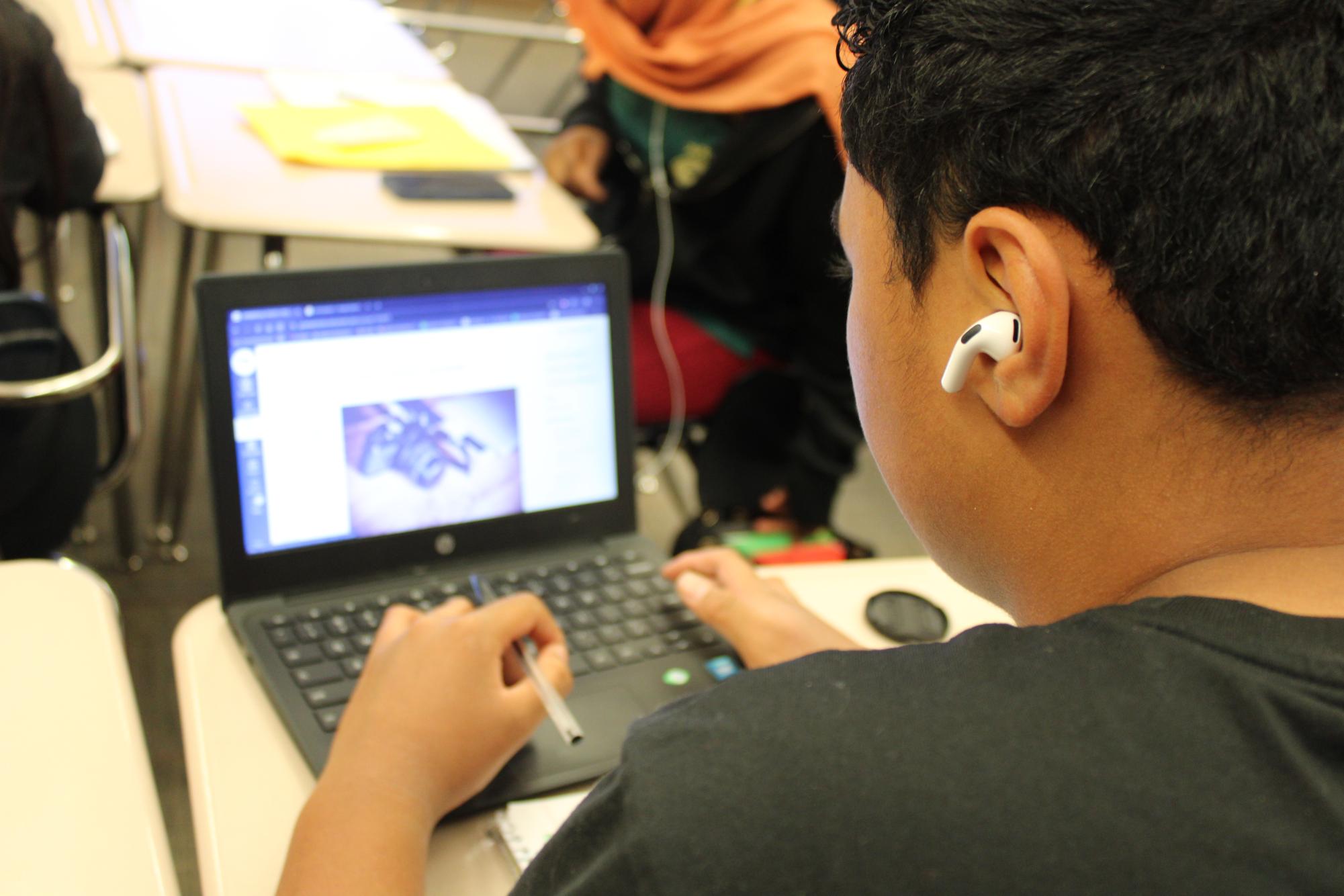
Valle-Encarnacion is more on the side of disagreeing that music affects learning. Valle-Encarnacion is most likely indicating that music motivates students, keeping them engaged on their assignments and also making them more focused. Valle-Encarnacion also mentions some friends she’s using as an example that many people don’t like to work in silence. In most cases if a student isn’t in a class environment that keeps them focused, they most likely won’t engage or work/be focused.
Freshman Xavier Ledesma Ortegam Jr said, “I think it depends because many like to use the music to distract themselves and cancel out the noise from the lesson they’re probably in. That can cause the person not to listen to what’s going on with the lesson. I’m leaning towards the ‘yes’ side because, honestly, people really do use music to actually work. Maybe someone’s attention span is short, so they use music to try to engage and focus during class.” Ledesma is in the middle because, as he said, it depends on why they’re using the music for; it could be to block out the lesson and the teacher’s voice. But also, people use music to try to focus, like Valle-Encarnacion said that she has friends who can’t work in silence. So many people are possibly thinking that most people listen to music exactly during the lesson but from hearing from many who listen to music during class is that they mostly listen to music during independent work time so that they stay engaged and focused so they don’t get off track. Music affects someone’s learning in complex ways; it depends on the individual’s music and whether it really helps them or not. Music can cause someone’s memory if it helps them remember something or if it helps the individual be/get motivated or have a change of mood. Someone’s change of mood because of music can really help them engage in their work or be focused.
Instrumental, lo-fi beats, classical, and movie/game soundtracks are recommended to listen to during class to try to focus and engage during independent study or work time because the uptempo, clean pop songs are suited for trying to focus. Study time. Most teachers play those types of genres during independent work time for the students so they can try to engage. This can go both ways, either good or bad, but it usually really helps the students do their individual work and stay on task, which was the teacher’s goal.
Music can reduce stress and cause motivation. According to 2007 study, classical music helps our brains absorb new information. So overall, music can help the brain absorb new information and keep an individual focused and engaged. The cons of this are – it can cause interference with the brain into understanding what’s going on, reducing comprehension, and being distracted during lectures. This is all according to David Cutler. And well, the ‘pro’s’ to listening to music during school hours are- Students who don’t like to work in silence can finally focus when doing their work, so boosting the focus of that individual– it reduces stress, and it also improves the individual’s mood.