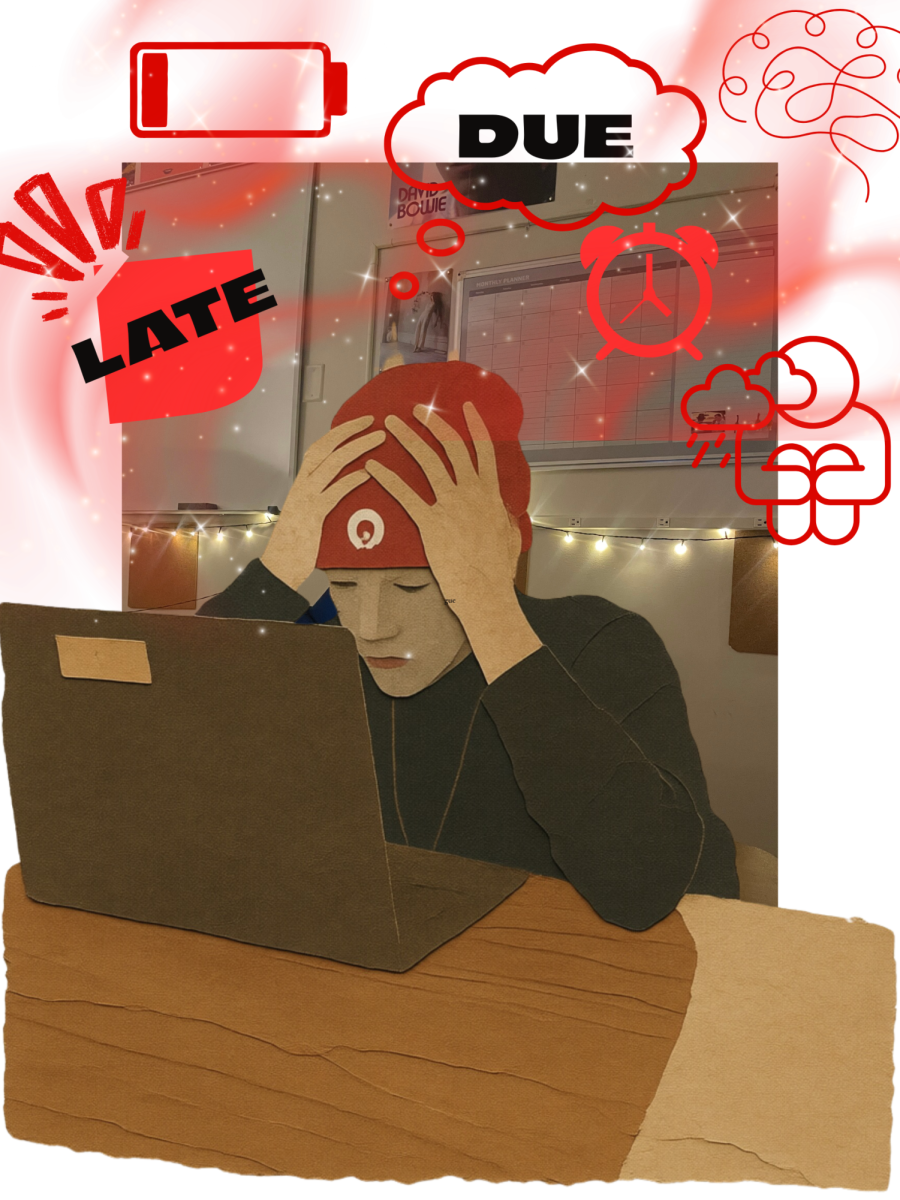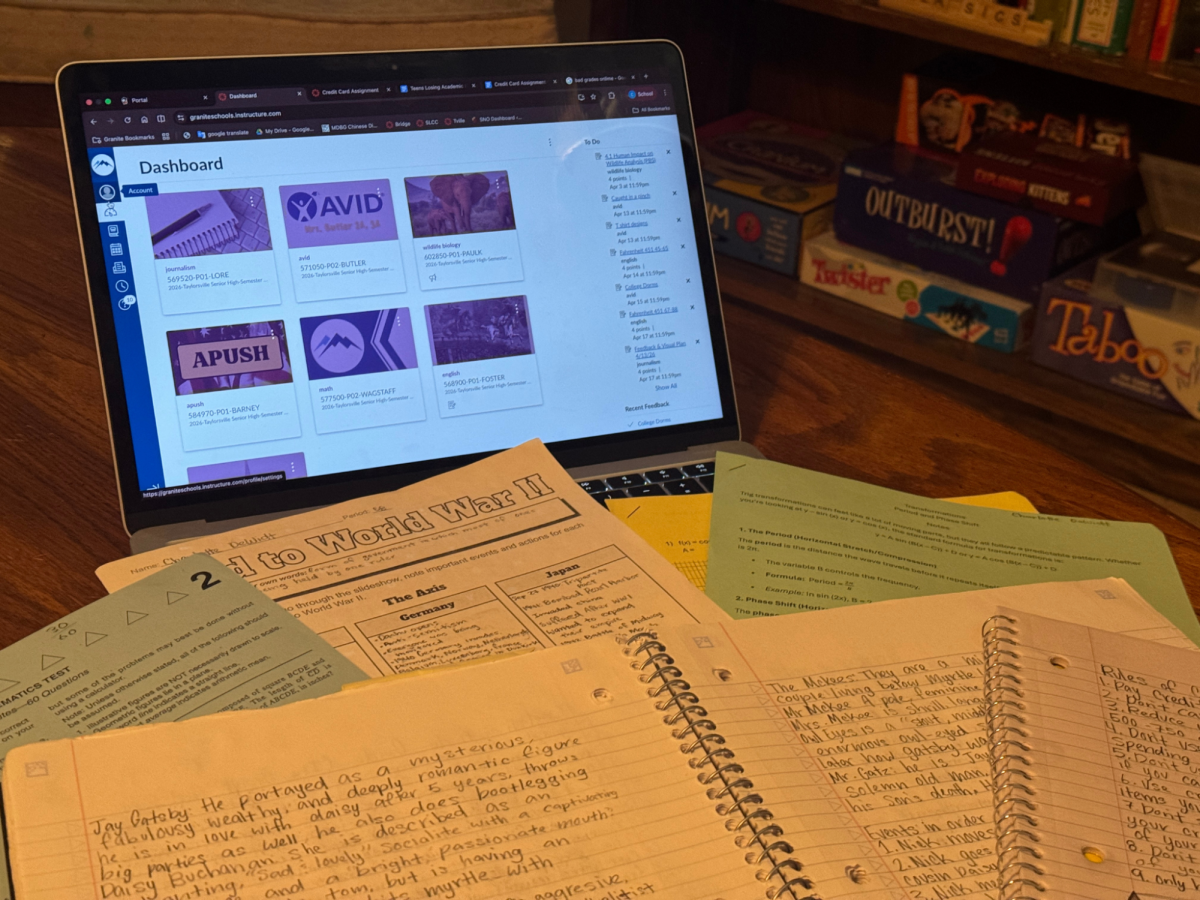
On paper, today’s teens have more academic resources than ever: tutors, technology, and advanced courses. Yet many are falling behind for a different reason: a mental health crisis that’s draining their ability to learn. The growing mental health crisis among teenagers is quietly eroding their academic potential, leaving many capable students struggling to keep up in school. According to experts at the CDC (Centers for Disease Control and Prevention), “In 2023, 40% of U.S. high school students reported persistent feelings of sadness or hopelessness.”
A common factor among students nowadays is feeling unmotivated and lazy. This often a surface behavior masking deeper issues, such as anxiety, burnout, lack of engagement, making it hard to be successful in school due to some of these issues; Batoul Soueidan, Callie Mickelson and Emma Black all juniors at Taylorsville High School. They all share the same factors of feeling overwhelmed and not having motivation to do anything with school.
Among the many mental health challenges teens face, “Nearly 1 in 3 adolescents (approximately 31.9%) ages 13 to 18 struggling with anxiety” (National Institute of Mental Health) . Anxiety stands out as a major factor that can disrupt concentration, lower motivation, and ultimately affect grades. Batoul Soueidan, a junior, shares her personal experiences with anxiety in her academic life, “Anxiety and depression impacts my concentration heavily. I barely have motivation to pay attention in class and often find myself doing something else like doodling on the paper which negatively impacts my grades.”
Her experience demonstrates why mental health support in schools is important. When students receive proper support, counseling, or accommodations, they may be better able to manage their anxiety and stay engaged in their academic work.
Emma Black, a junior, explains what anxiety and depression makes her feel in a classroom; “Anxiety will convince you that everything you do is wrong and that every way you do it needs to be perfect, and if it’s not perfect, then it won’t be good. Depression will just make you procrastinate on all of those because it is scared of not being perfect. An uninterest in a lot of work, an interest in showing up to school and wanting to do the work, as well as not paying attention and keeping to yourself, especially in classroom settings.”
Mental health has been taking a toll on students’ mental health, making it harder to learn and focus in classes due to certain standards that teachers and parents have been setting on their children making it nearly impossible to actually achieve this goal that has been set for them. “Where the achievement becomes toxic is when students tangle up their entire sense of self and value with their achievements. When students have to achieve in order to matter.” According to an article by Harvard Gazette. This really changes how students go about their academic career.
Experts at the Centers for Disease Control and Prevention (CDC) also share that poor mental health can negatively affect school performance and overall well-being. This can make school a lot harder from some kids that struggle to keep up with everything going on in their classes.
Pressure such as staying on top of school work, tests and extracurricular activities is also a major factor, as students often feel they must perform well at any cost. This constant expectation to achieve high grades can increase anxiety and make it even harder for students to concentrate and stay motivated in class.
Callie Mickelson, a junior at Taylorsville High School, shares that pressure from school can really affect someone’s well being, “With schools and like school districts, just the whole school system in general, it’s not really suited to fit every single student’s needs. And that’s kind of an issue, especially because not every student is the exact same.”
The Granite School District has counselors, psychologists, and social workers. Each school has assigned staff to provide individual and group counseling, behavioral support, and social-emotional learning.
Finding ways that help all students’ could really help boost morale and really motivate these students to let them know they can achieve great things with a little bit more of support from the place that is supposed to give you support and make you achieve great things later down the road in your life when looking for an academic career.
A way that students have found to be helpful is a support system. These can really help you feel motivated to keep going with your school work because you have people around you that care for you and want you to do your best, but Mickelson shares “There’s definitely been a time where I have wanted a stronger support system and I have kind of needed one.” Sometimes support systems aren’t always available which can make things harder for someone.
According to an article from University at Buffalo, “Building a strong support system involves intentionally cultivating relationships with people who provide emotional, practical, and social support. It requires a mix of nurturing existing bonds, making new connections, and setting boundaries to ensure relationships are positive and reciprocal.”
Overall, finding ways to support and motivate more students can help reduce the negative effects of anxiety and academic pressure, allowing them to focus better and perform to their full potential. One last thing Soueidan shares is “Grade less harshly, give out less homework, make class engaging and fun.” By making classrooms more supportive and engaging; like incorporating active learning by breaking lectures into 10-15 minute segments, using Think-Pair-Share, and implementing hands-on activities or multimedia. Also Schools can help students manage stress while still encouraging them to succeed academically.